News

Image: Children enjoying clean water at a Solar Water Solutions project site in Papua New Guinea.
November 2026
As El Niño intensifies across the Pacific, governments and humanitarian organisations face growing pressure to secure reliable freshwater supplies. With drought already affecting island communities, solar-powered desalination in the Pacific Islands offers a practical solution for both emergency preparedness and long-term water resilience.
The Pacific is entering a critical period for water security.
According to the World Meteorological Organization (WMO), the strengthening El Niño is expected to increase the risk of below-normal rainfall across large parts of the western Pacific in the coming months.
Water shortages are already affecting parts of the Pacific, highlighting the vulnerability of island communities to prolonged periods of low rainfall.
For many remote Pacific islands, the challenge is particularly severe. Freshwater resources are often limited to rainwater harvesting and small groundwater reserves, while transporting water from larger islands can be costly and logistically difficult.
The consequences extend beyond household water supply. Prolonged shortages can affect healthcare, sanitation, education, agriculture and local livelihoods.
As climate risks intensify, securing alternative freshwater sources is becoming an essential part of disaster risk reduction and climate adaptation planning.
Solar-powered reverse osmosis desalination offers a way to produce freshwater from seawater or brackish groundwater, reducing dependence on increasingly unpredictable rainfall.
Unlike rainwater harvesting, desalination can provide an additional water source during extended dry periods, provided suitable source water and operating conditions are available.
For remote islands with limited or unreliable electricity infrastructure, solar-powered systems offer several advantages:
Importantly, desalination is not a replacement for rainwater harvesting, water conservation or sustainable groundwater management. It is an additional tool for building more resilient and diversified water supply systems.
Practical experience is essential when selecting water treatment technology for remote island environments.
Solar Water Solutions, a water technology company specialising in solar-powered reverse osmosis desalination, has supplied systems to Pacific island communities, including Papua New Guinea, Tuvalu, Kiribati, Tonga and the Cook Islands.
In Tuvalu, a solar-powered seawater desalination system with a production capacity of approximately 1,600 litres per hour demonstrates how decentralised water treatment can support freshwater availability in remote atoll communities.
Solar Water Solutions’ technology is designed to operate directly with solar energy, with hybrid power options available where longer operating hours are required.
Across the Pacific, the company works with experienced regional partners who support system delivery, commissioning, operation and maintenance.
This combination of proven technology and regional support is particularly important for island communities, where access to specialised technical services can be limited.
For humanitarian organisations and public authorities, the challenge is not only responding to water shortages but ensuring that reliable water supply solutions can be established before conditions deteriorate further.
The WMO and the United Nations Office for the Coordination of Humanitarian Affairs (OCHA) have emphasised the importance of anticipatory action as El Niño intensifies.
Decentralised desalination can form part of this preparedness approach, particularly in coastal communities where seawater is readily available but freshwater infrastructure is vulnerable.
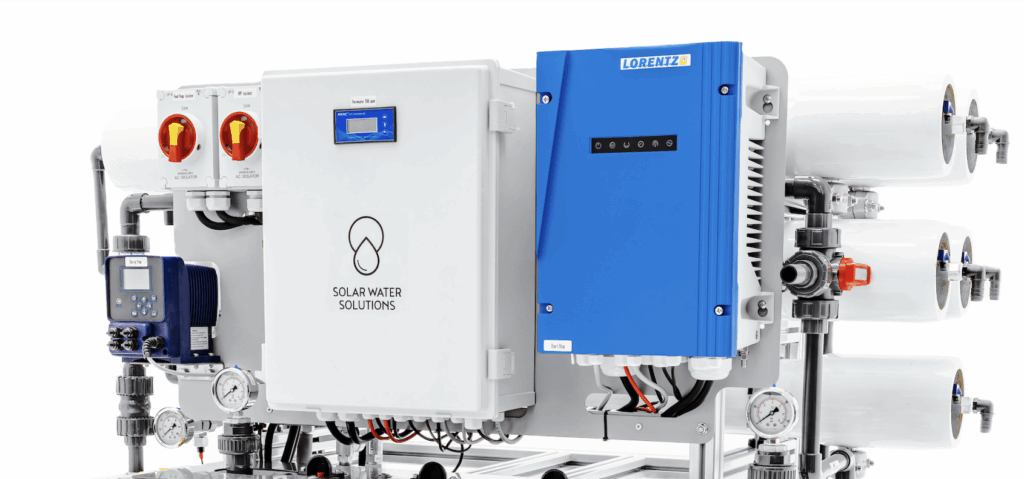
Solar Water Solutions offers compact and containerised seawater reverse osmosis systems suitable for a range of applications, from smaller island communities to larger municipal water supply projects.
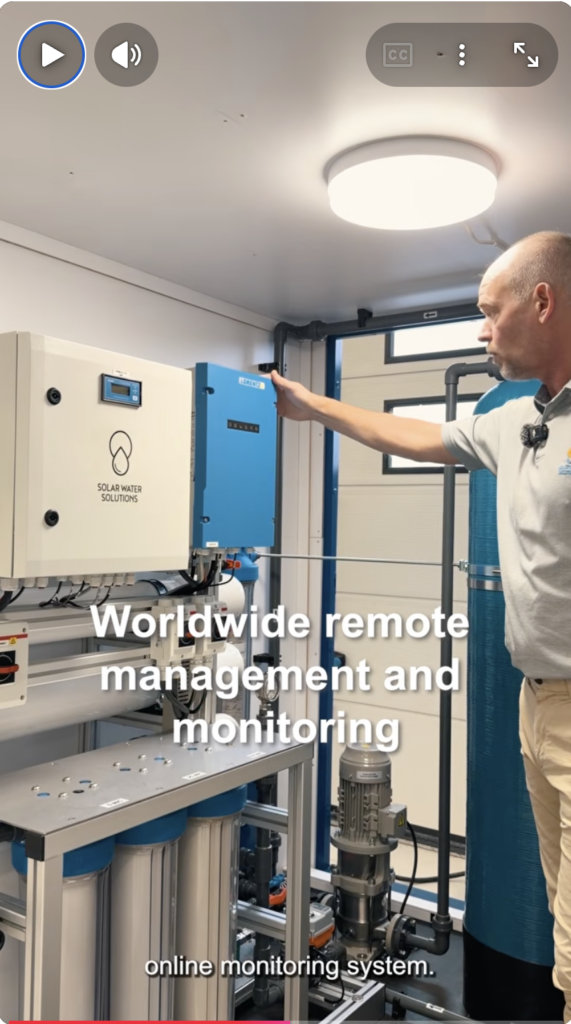
Depending on site requirements, systems can be configured for solar-direct or hybrid operation, with remote monitoring capabilities to support ongoing performance and maintenance.
For humanitarian and government procurement teams, key considerations include daily freshwater demand, source water quality, available power, transport and installation requirements, and access to local technical support.
Early assessment of these factors can help shorten the time between identifying a water supply risk and implementing a suitable solution.
The current El Niño highlights a wider challenge facing Pacific island nations: how to build reliable water infrastructure in locations increasingly exposed to climate variability and extreme weather.
Emergency water deliveries remain essential during acute shortages, but they are difficult to sustain as a long-term solution for remote communities.
Investing in decentralised water treatment, alongside water storage, conservation and improved infrastructure, can help reduce vulnerability to future droughts.
For governments, development agencies and humanitarian organisations, the opportunity is to move from reactive emergency response towards more resilient and locally sustainable water supply systems.
Reliable freshwater access should not depend entirely on the next rainfall.
Solar Water Solutions works with governments, humanitarian organisations and local partners to develop solar-powered desalination solutions for remote and climate-vulnerable communities.
Planning a drought preparedness, emergency water supply or climate resilience project in the Pacific? Contact our team to discuss suitable solutions and regional support.