News
Clean water production in remote locations is often seen as complex—but modern solar-powered desalination systems are designed to be simple, robust, and ready to deploy.
In this article, we break down the key features shown in the video and answer the most common questions about how these systems work in real-world conditions.
A compact containerized system can typically produce:
~0.8 m³/hour
This is enough for:
Larger systems follow the same concept and can scale up to hundreds of cubic meters per day.
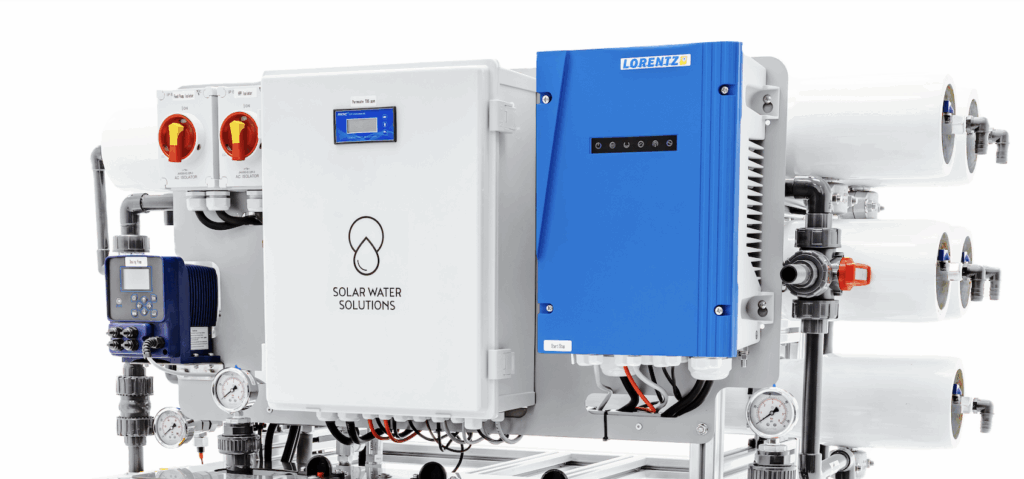
The system shown in the video is built around five core elements:
These remove salt and contaminants from seawater.
Protects the membranes by removing particles and impurities before filtration.
Drives the desalination process.
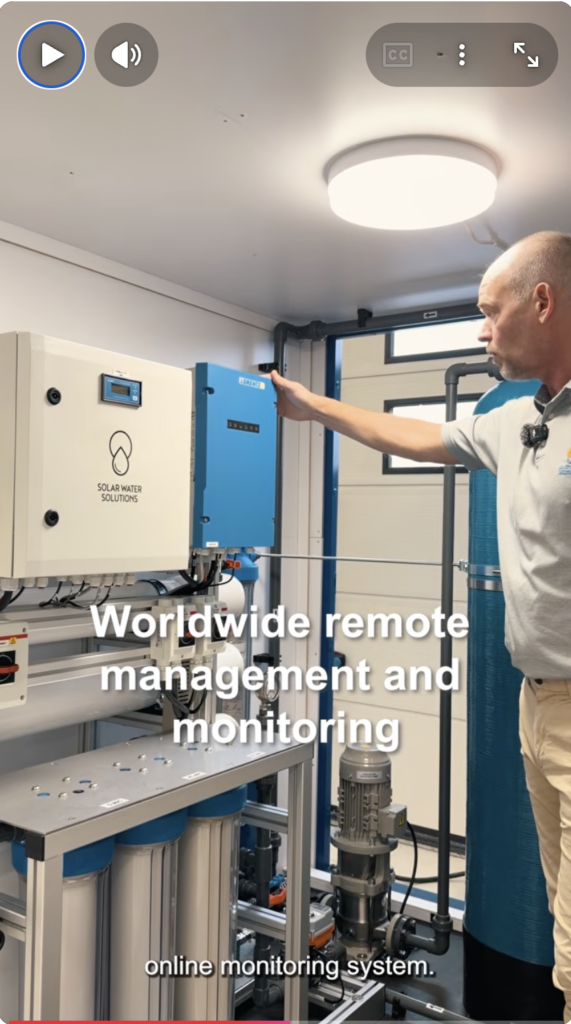
Manages operation automatically based on available energy. We use the LORENTZ Global remote management and monitoring system.
Everything is integrated into a plug-and-play unit, reducing installation time and risk.
Yes.
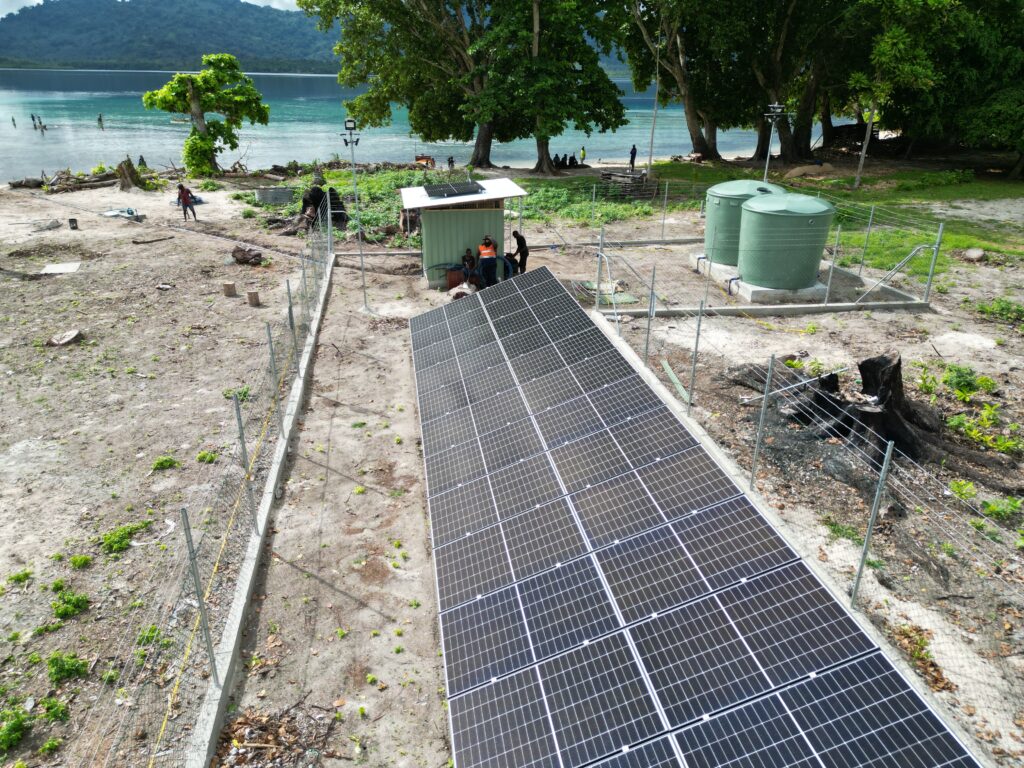
SolarRO systems are designed to:
This removes the need for diesel and reduces operating costs significantly.
According to industry practice, solar-powered desalination enables decentralized water production without fuel dependency.
Solar energy is not constant, but the system is built for that.
It can:
This ensures high uptime in real off-grid environments.
Yes.
The system includes:
This allows operators to:
The system is flexible and can operate with:
This makes it suitable for:
Based on real deployments, common use cases include:
In all cases, the goal is the same:
Reliable access to clean water without dependence on infrastructure.
Typical figures:
Energy consumption:
~1–2 kWh per m³
Water cost (solar-powered, brackish water):
~0.30 – 1.00 €/m³
Water cost (solar-powered, seawater):
~0.80 – 2.00 €/m³
Actual cost depends on:
Solar-powered desalination systems combine proven reverse osmosis technology with renewable energy to deliver clean water anywhere.
With containerized design, smart control, and remote monitoring, they offer a practical and scalable solution for off-grid water supply.
Want to see what this would look like in your location?
Compare your current water cost or get in touch to explore a tailored solution.